
Unfortunately, bumps, falls and accidents are sometimes part of growing up. Whether it happens during sport, at school, in the playground or simply around the house, an injury to a child’s tooth can be challenging for parents or guardians and children themselves.
Thankfully, following dental trauma, some teeth can be successfully repaired or restored, particularly when they are assessed promptly.
At Toothbeary, we understand that dental trauma can be challenging. Our priority is not only to assess the injured tooth, but also to make your child feel safe and comfortable while deciding on the most appropriate treatment for them.
What happens when a child damages a tooth?
Dental trauma can vary depending on individual circumstances. A child may have a small chip in the enamel, a larger fracture, a loose or displaced tooth or, in more serious cases, a tooth may be completely knocked out.
Sometimes an injury may appear relatively minor from the outside, but the impact can still affect the inside of the tooth, its root or the surrounding tissues. This is why it is important to have the injury assessed as soon as possible, even if your child is not experiencing pain.
Treatment will depend on several factors, including whether the injured tooth is a baby (primary) or permanent (adult) tooth, the type and extent of the injury, whether the nerve has been affected and the stage of your child’s dental development.
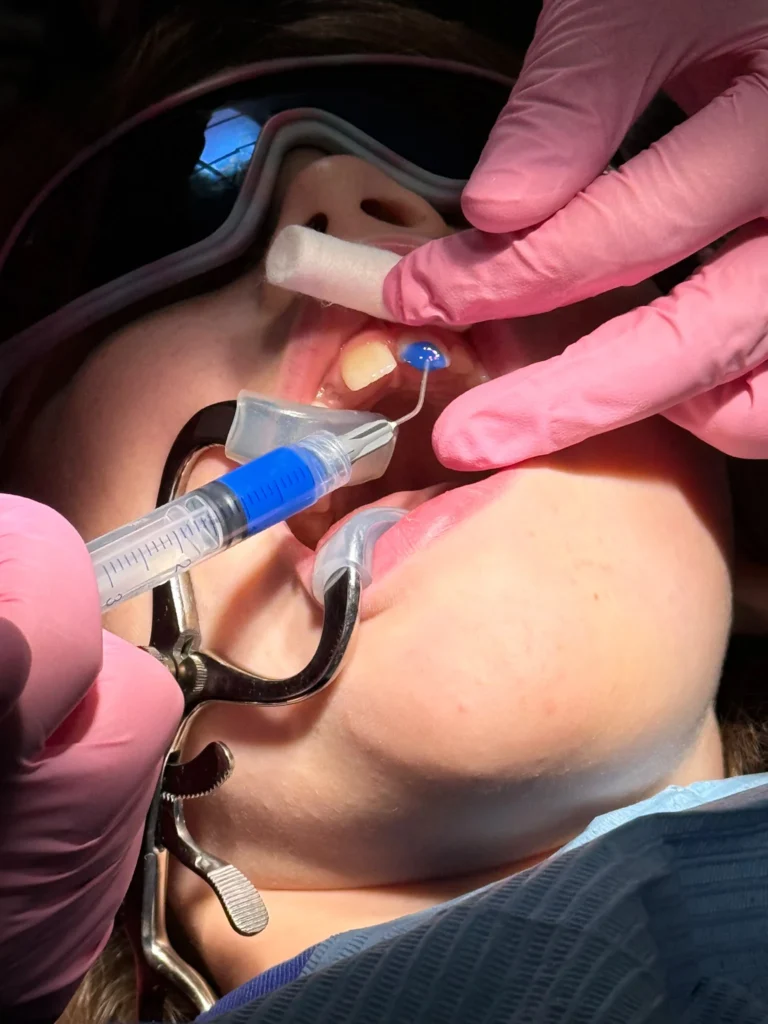
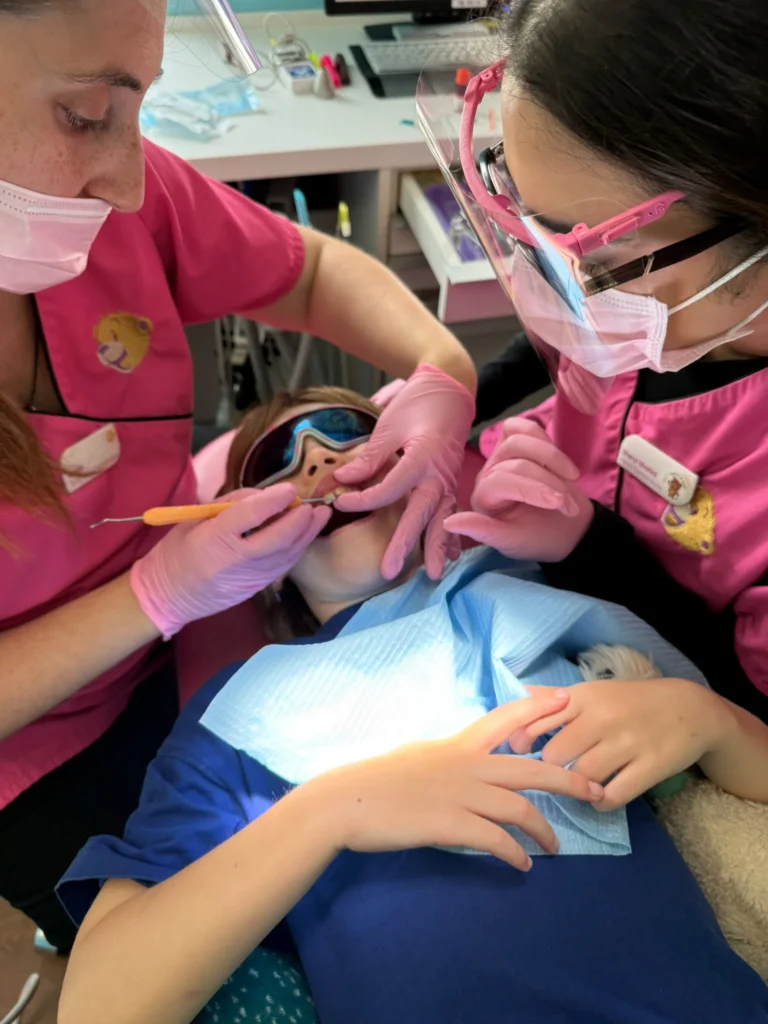
How can a broken or chipped tooth be restored?
Treatment for a broken or chipped tooth will depend on how much of the tooth has been affected.
For a small chip or uncomplicated fracture, it may be possible to smooth the tooth or restore the missing area using a tooth-coloured composite material, carefully shaped to recreate the tooth’s natural appearance.
In adult teeth if your child has managed to find the broken piece of the tooth, this should be placed in milk immediately and brought to the appointment. In some circumstances, the original piece may be reattached.
For larger fractures, further restorative treatment may be required. If the injury has exposed or affected the pulp, the living tissue containing the nerves and blood vessels inside the tooth additional treatment may be needed to protect the tooth and maintain its vitality where possible. For example, a dental crown, which can be sued in primary and permanent teeth.
Our aim, wherever clinically appropriate, is to preserve as much of your child’s natural tooth as possible while restoring its appearance and function.
Baby teeth and permanent teeth are treated differently
One of the most important considerations following childhood dental trauma is whether the injured tooth is a primary or permanent tooth.
Baby teeth have permanent teeth developing underneath them, so treatment needs to take this into consideration. Protecting the developing adult tooth is an important part of managing trauma to primary teeth.
Permanent teeth require a different approach as we want to preserve them for the long term. In younger children, newly erupted permanent teeth may also have roots that are still developing, which can influence the treatment recommended.
Importantly, a baby tooth that has been completely knocked out should never be put back into the socket, as this could damage the developing permanent tooth underneath.
What if the nerve of the tooth has been affected?
A deeper fracture can sometimes expose or damage the pulp inside the tooth, but this does not automatically mean that the tooth has to be extracted.
Depending on the injury, your child’s age and the development of the tooth, different treatments may be considered to preserve the tooth and, where possible, maintain the health of the pulp.
More complex dental trauma, including complicated crown fractures, root fractures or significant displacement of teeth, may require more specialised treatment and careful monitoring.
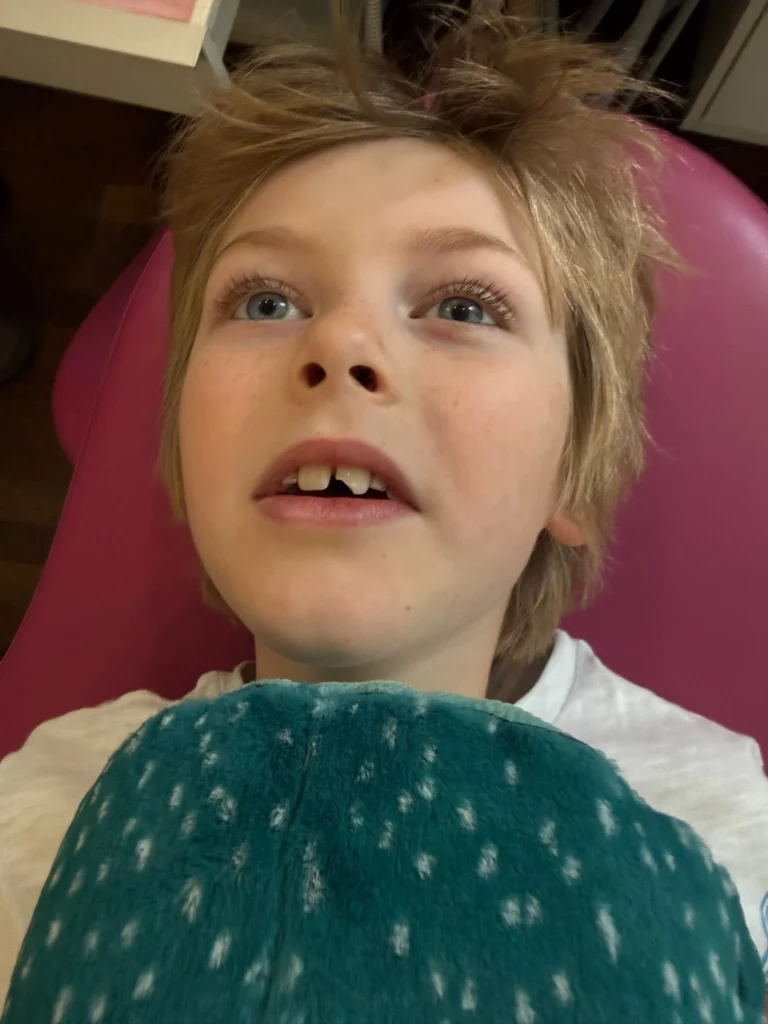
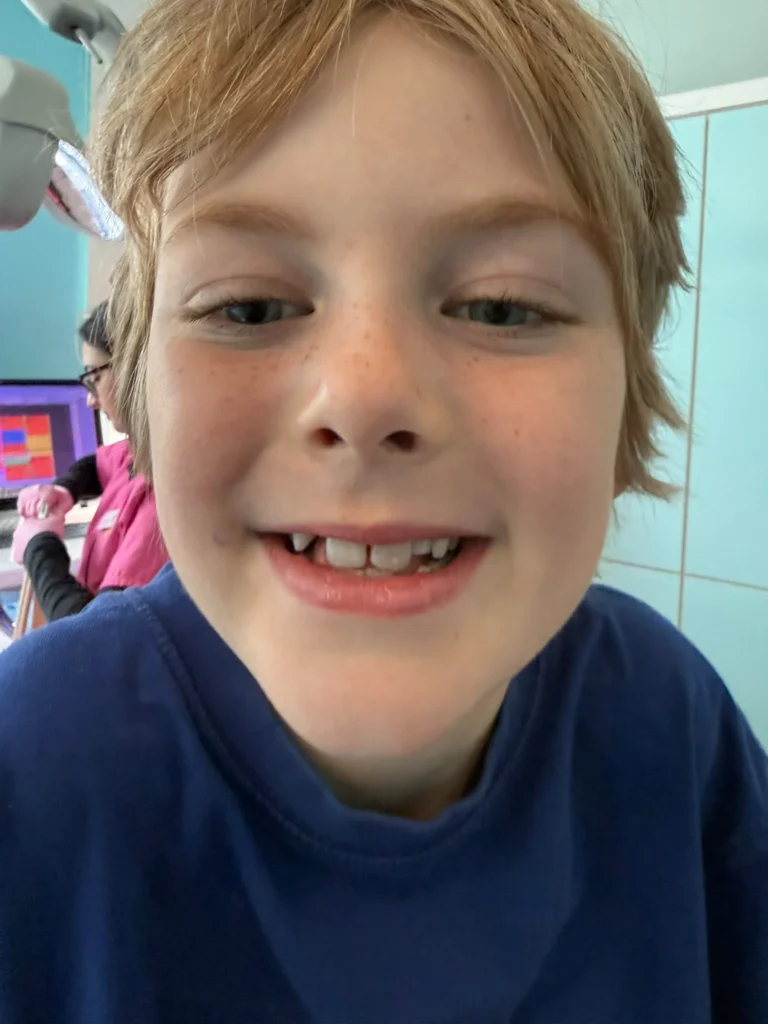
Why is follow-up after dental trauma so important?
Restoring the appearance of a damaged tooth is only one part of trauma care.
A tooth that looks healthy immediately after an accident can sometimes develop changes weeks, months or even longer afterwards. Follow-up appointments allow us to monitor for changes in colour, sensitivity, mobility, signs of infection, root development and the health of the surrounding tissues.
For children, monitoring also allows us to assess how an injury may affect their developing teeth as they grow.
What should parents do immediately after dental trauma?
If your child chips or breaks a tooth, contact a dentist as soon as possible. If it is an adult tooth and you find the broken fragment, place it in milk and bring it with you, as it may sometimes be possible to reattach it.
If a permanent tooth is completely knocked out, this is a dental emergency and immediate action is important. If you have the tooth, hold the tooth by the crown, the white part rather than the root and rinse it under cold water. If possible, place the tooth back into its socket. If this is not possible, keep it in milk or saline and seek emergency dental care immediately.
Remember, a knocked-out baby tooth should not be put back into the socket.
Restoring more than just the tooth
A chipped, broken, or displaced tooth can be upsetting for a child and distressing for their family, but dental trauma does not necessarily mean that the tooth is lost.
With prompt assessment, appropriate treatment and careful follow-up, many injured teeth can be successfully maintained.
If your child suffers a dental injury, even if the damage appears small, having it assessed promptly allows us to determine the extent of the injury and whether treatment or monitoring is needed.
At Toothbeary, our focus is always on protecting your child’s developing smile while making their experience as gentle and positive as possible.

